The woman in the mirror looks like someone you might know. She is in her bathroom, where her roots have just grown back in, looking at the harsh line between deep chestnut and a band of stubborn silver. The box dye is sitting on the sink, just like it does every month. She lets out a sigh. The smell, the stains on the towels, and the hour she’s about to lose again.
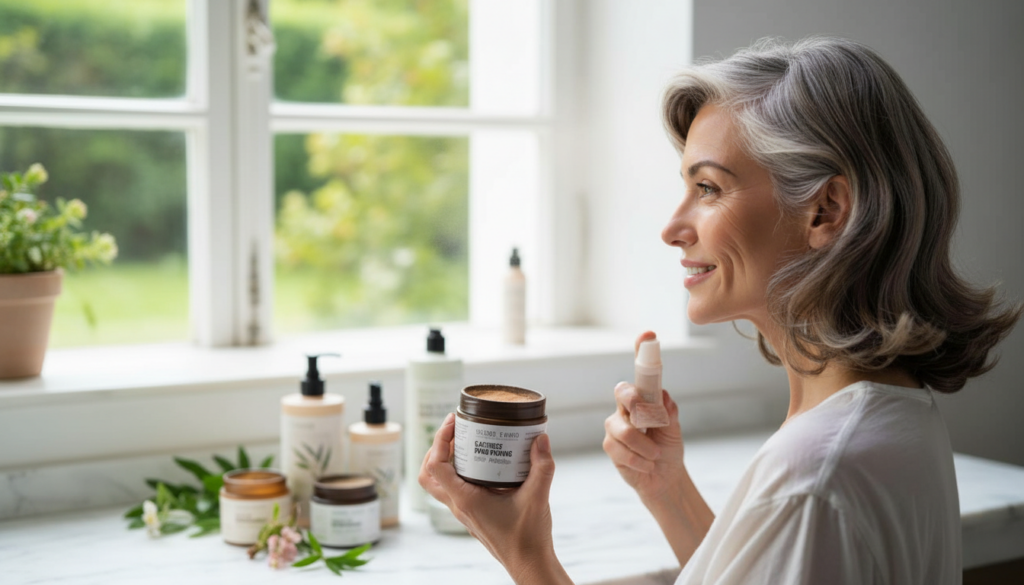
But this time, she doesn’t open the box. She picks up a soft brush, a small pot of plant-based powder, and a light misting spray. Ten minutes later, the gray temples are less noticeable, the hair looks fuller, and she looks less tired, which is surprising.
A little change.
A big question.

There is still grey hair… it just got smarter
If you walk down any city street lately, you’ll see it: greys aren’t going away, they’re blending in. The hair doesn’t look like a solid color anymore. Instead, there are soft reflections, natural shadows, and strands that catch the light instead of fighting it.
The new trend doesn’t say “no gray here” very loudly. It says, “yes, but better.”
The goal is not to get rid of all the gray hair. It’s to change that sharp difference into a soft gradient that makes the face look better, the eyes brighter, and gives the look of being rested and lifted that we think of as youthful.
If you spend five minutes looking through beauty accounts on Instagram or TikTok, you’ll see this change right away. Instead of full coverage dyes, colorists are filming “grey blending” transformations. A 54-year-old teacher goes from harsh box-black to soft ash brown, leaving behind strands of silver on purpose. On paper, she doesn’t look younger, but she does look lighter and more modern.
Salons are putting up videos of people before and after their haircuts. The “after” videos still show gray hair, but not as a flat, aging block at the roots. The skin tone is more even, the face looks clearer, and the cheekbones are better defined.
One Paris colorist put it this way in a caption: “We don’t fight your greys anymore.” We use them.
There is a practical side. Permanent dyes mean that you have to keep your roots up all the time, deal with chemicals, and deal with broken ends. Plus, your budget quietly grows over the year. Instead of painting every single strand, grey blending and subtle coverage techniques focus on depth, shine, and areas that frame the face.
The eye sees differences before it sees color. The whole face looks less “drawn” when the line between brown and white roots disappears. That smooth change makes the brain think that the skin is smoother and the features are fresher.
It’s not so much about hiding age as it is about getting rid of what makes us look tired. That’s a very different kind of beauty goal.
From being addicted to dye to “soft cover”: how it really works
The first thing I do in the new routine is look in the mirror and ask myself, “Where do my greys bother me the most?” For a lot of people, it’s not the whole head. The front hairline, the temples, and the crown parting are all there.
Instead of covering everything, the trend is to focus on those “visual hotspots.” Light, semi-permanent shades, tinted mousses, mineral powders, and vegetable-based glosses are only put on these areas. The rest of the hair looks more natural.
From a distance, this makes everything look the same, but up close, you can still see texture and depth. The hair moves, reflects light, and most importantly, it doesn’t form that awful root “helmet” two weeks later.
Marta, who was 49, had been dyeing her hair a dark chocolate brown every three weeks. She says that her hair is perfect in week one, but in week two, her roots start to bother her, and in week three, she has to dye it in a panic. One day, her colorist told her to get lowlights instead of full coverage.
They added some darker strands around her temples, feathered in some warm highlights, and left some of the silvers spread out through the top. Then they gave her a small gray touch-up powder to use like makeup for the parting.
She laughs and says, “People said I looked rested, not ‘new hair.'” “Nobody could say what had changed, but everyone said I looked better. And I’m saving money and time.
This method changes the way you think about things. Covering up gray hair completely is like airbrushing a face: the more you erase, the more every little flaw stands out when it comes back. It is nicer to be semi-transparent.
Instead of covering up gray hair, hair pros are using softer formulas like acid glosses, ammonia-free tints, henna mixes, and plant-based color masks. The natural white works like a built-in highlight, making the look bright instead of flat.
Let’s be honest: no one really does this every day. So, methods that allow for regrowth, fading, and imperfect upkeep seem more real right away. That’s why this trend is here to stay.
The new playbook: show less skin and look younger.
The plan at home is more about *small, smart moves* than big changes. First, lower the intensity of the shade you usually use. If you’ve been using a very dark permanent dye, switch to a semi-permanent dye that is one or two shades lighter. This makes the grey look less harsh right away.
Next, pay attention to the “frame,” which is the first centimeter around your face. A light gloss or toner that is a little warmer than your natural color can make the silver there less harsh without making it go away. You can even blend with your fingers while the product is on, just like when you smudge eyeliner.
Many women now use tinted root sprays, crayon sticks, and colored mascaras just along the parting for the weeks in between. Five minutes, not a full dye job, but the mirror is nicer.
Chasing the color you had at 22 is also a trap. Skin color changes over time. A jet black or glassy red that used to work can suddenly make your features look harder and make the shadows under your eyes darker. A soft chocolate, hazelnut, dark blonde, or cool beige color will often make you look more radiant than a shade that is too bright.
We’ve all had that moment when a color that is too dark makes us feel like we’re wearing a wig. That feeling gets stronger when you start to see greys. The new trend says, “Take a step back.” Let some light back into the hair.
If you’re not ready to show a lot of silver, don’t stop cold turkey. Instead, lighten your overall shade and treat the roots less harshly.
In salon brochures, they don’t talk about the emotional part very often, but it’s there. When grey hair comes on quickly or early, it can feel like you’ve lost control over how you look. The “soft cover” movement gives you more options than just a yes or no choice between dye and full silver.
“When clients stop asking me to ‘erase’ their gray hair and start asking how to ‘live with it better,’ the conversation changes completely,” says Claire, a London colorist. “We talk about how our faces look, our personal style, and how we live.” Not only age.
Think of concealer, not plaster, when you use makeup. You don’t have to use tinted sprays, powders, and glosses for the rest of your life.
Keep the shine: grey and colored hair both look younger when they’re shiny. A layer of dye doesn’t do as much for youthfulness as gentle shampoos, weekly masks, and heat protection do.
Shorter, layered, or face-framing cuts break up patches of gray and add movement, which makes the hair look fresher.
Stay away from full black unless it’s really your natural base. On most faces over 40, it makes lines look harder instead of softer.
Give yourself a transition season of three to six months to try out blending instead of expecting it to be perfect right away.
A new way to think about time and our hair
What is happening here is not just a trend; it is a new beat. Color used to be a problem every month. Now it’s a set of small, flexible gestures that change with the seasons, our stress levels, and how much we care that week. You might go to a salon for a blending session some months. Some people will live mostly with their gray hair and just put on a little powder before a big meeting.
That ability to change is oddly freeing. Hair begins to feel less like a war zone and more like a chat with yourself in the mirror. Some days you want more softness, and other days you want more silver. There is space for both.
The plain truth is: the face often looks younger when we stop trying so hard to pretend nothing has changed. When they are diffused and cared for, greys can frame features, add depth to a haircut, and even look quietly luxurious. The new question isn’t “How do I hide this?” but “How do I use this so I still feel like me, just updated?”
And that question doesn’t have a single right answer. It has as many versions as there are heads of hair looking back at the bathroom mirror.
| Detail | Value for the Reader |
|---|---|
| Grey blending beats full coverage | Softens contrast instead of erasing every silver hair. Face looks fresher and less tired with easier regrowth. |
| Targeted touch-ups | Focus on hairline, temples, and parting using semi-permanent and makeup-like tools. Saves time and money while keeping control of your image. |
| Lighter, softer shades | Switch from harsh dark dyes to warmer, translucent tones and gentle formulas. Enhances radiance, respects hair health, and avoids the “wig” effect. |
FAQ:
Question 1 Can I try grey blending if I’ve been using box dye for years?Yes, but you’ll need a transition phase. A colorist can gradually lighten your base and add lowlights/highlights so your old dye line disappears step by step.
Question 2 Will I look older if I let some grey show?Not automatically. Harsh contrasts and flat, over-dark color often age the face more than soft, diffused greys combined with a modern cut and shine.
Question 3 What products are best for discreet at-home coverage?Root touch‑up powders, tinted sprays, semi‑permanent glosses, and vegetable color masks are ideal for veiling greys without heavy lines.
Question 4 How often do I need to color with this method?Many people stretch appointments to every 6–8 weeks, topping up only the visible zones between visits with quick, makeup-style fixes.
Question 5Can men follow this trend too?Absolutely. Subtle toning, lowlights, and light coverage at the temples or beard line work just as well on short cuts and masculine styles.